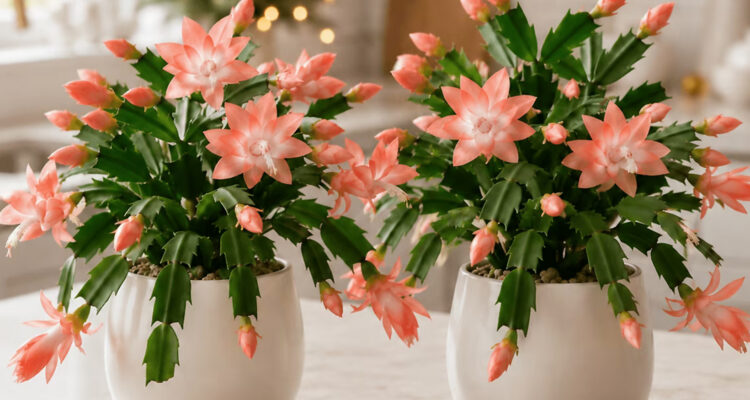
Varieties of these flowing succulents can brighten faces year-round!
Story by Judy Spaar | Intro photo courtesy of Walmart
A plant that has become so popular during the holidays surely has a history of its own within families. Just ask your grandmother where she got hers and the story begins! Not one Christmas cactus is without a heart-felt beginning.
Here is something most people don’t know: There are also Thanksgiving and Easter cacti. The confusion is understandable. All three plants look very similar, with flat, succulent stems composed of shield-shaped segments and vivid red, pink, purple, white, and even yellow or a combination of colors.
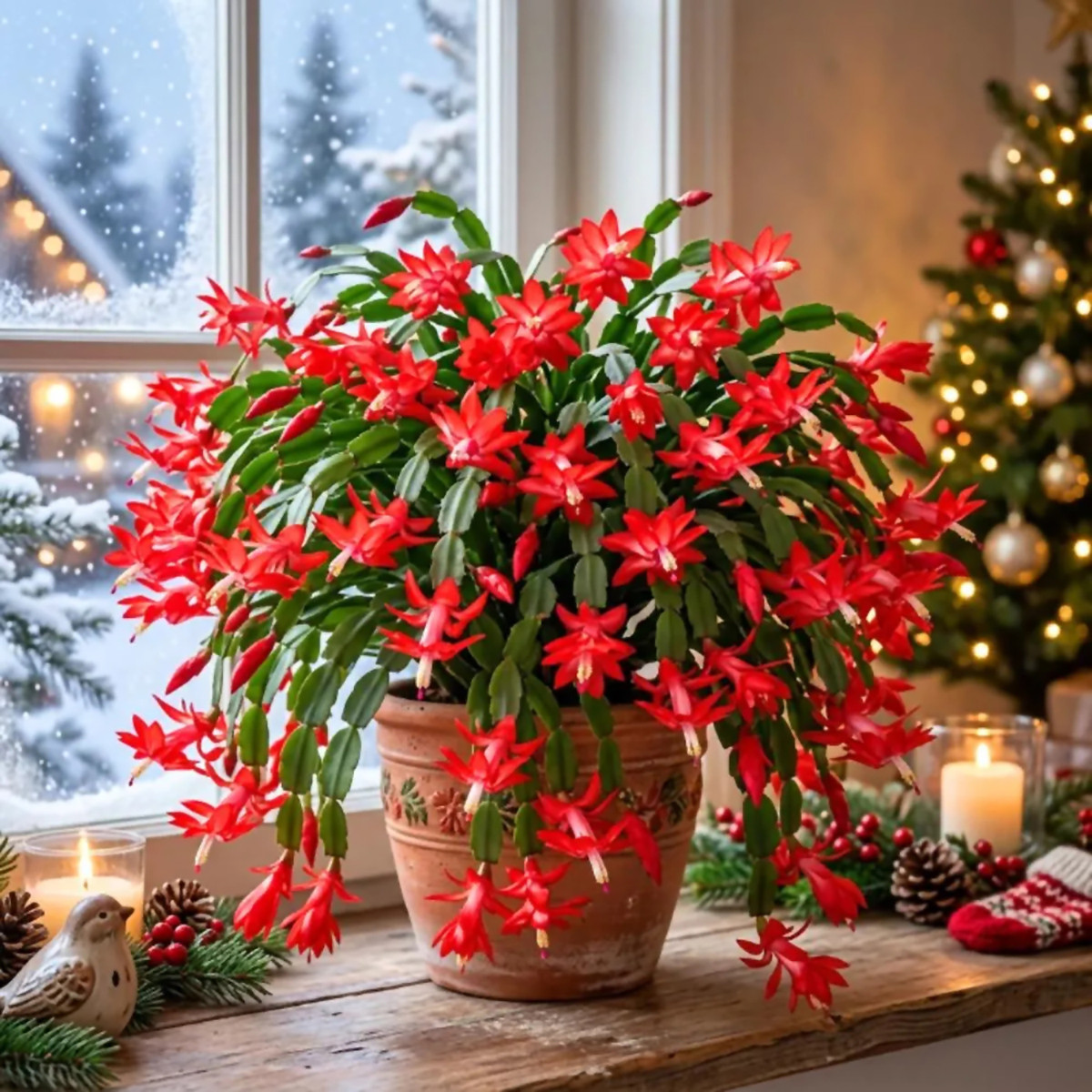
Photo courtesy of GreenHavenNursery.com
Christmas cacti have hanging branches composed of flat green leaves and rounded teeth. They produce red, pink, white, or purple flowers that bloom at the ends of these branches, which can reach up to three feet. Each flower, which is typically about three inches long, lasts for several days, though the entire flowering period typically spans about two weeks.
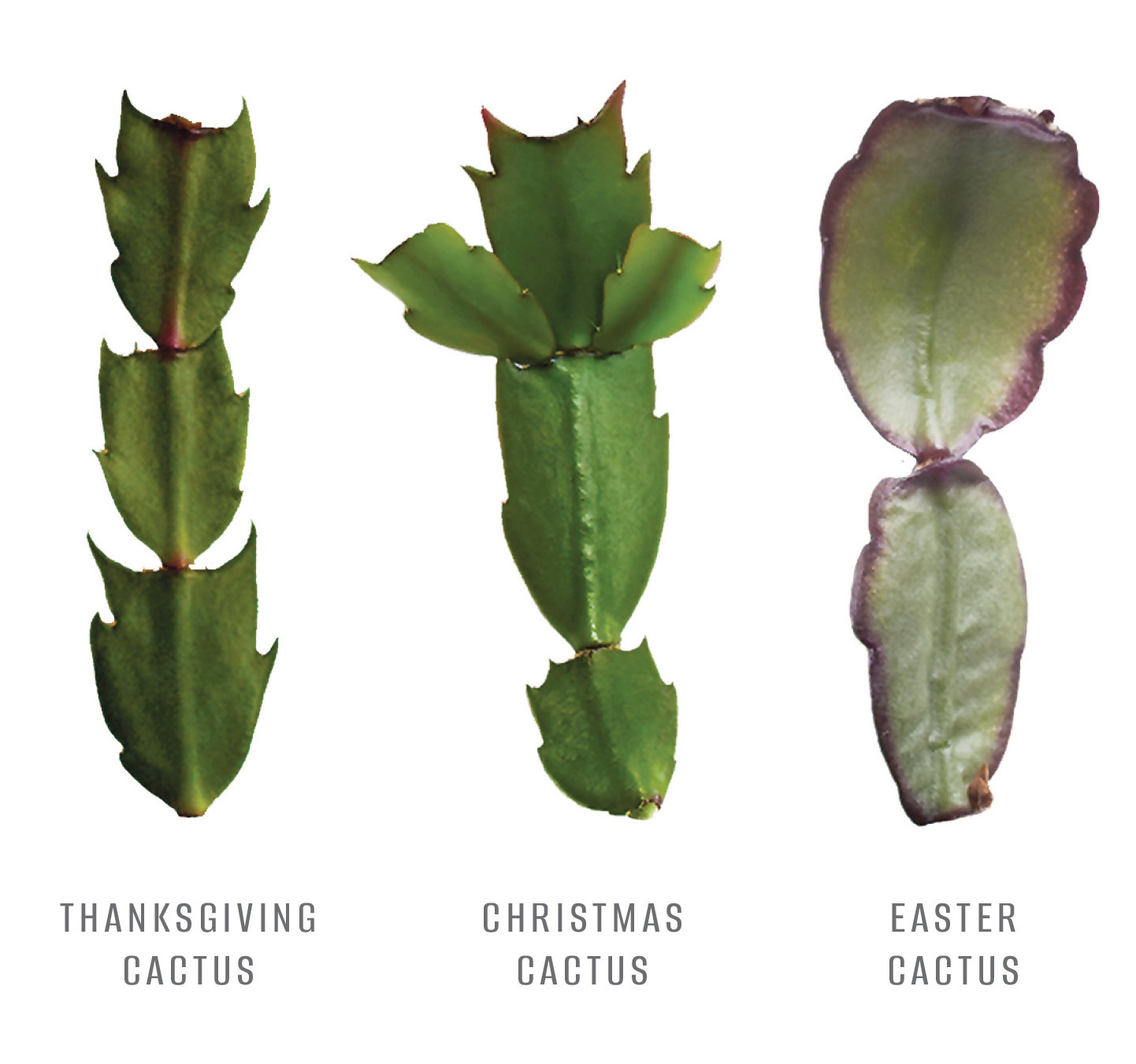
The biggest difference between Thanksgiving, Christmas, and Easter cacti is their stem segments. Thanksgiving cactus has the pointiest spikes on each segment, while the Easter cactus is the most round. Christmas cactus falls in the middle with points that aren’t nearly as sharp as the Thanksgiving version. Make them happy and they will bloom!
Originally, the Christmas cactus was found in the rainforests of Brazil, discovered by Europeans in the 1800s. Each seasonal plant likes bright, indirect sunlight so placing it near a window works. And it should be allowed to dry out between waterings. Overwatering is the main reason their leaves begin to droop
While these plants tend to put on their best show in the winter, they don’t like to get too chilly. Christmas cactus prefers temperatures that range between 60 and 70 degrees Fahrenheit, but it can tolerate temperatures as low as 50 degrees. And if your home is particularly dry, place a shallow bowl of water nearby to help humidify the air. Christmas cacti like it balmy.
If you want to make sure your bright colored flowers put on a show at Christmastime, try placing it in a completely dark area, such as the garage or basement, where lights won’t be on for 12 hours each night, then carry it to a sunny spot to expose it for ten hours of daylight. If it doesn’t bloom, try moving it closer to a sunny window.
One of the best ways to begin your own tradition is to gift a Christmas cacti to your friends and family. It’s simple. Since these cacti are succulents, you can use potting soil for succulents or make your own. There are recipes online.
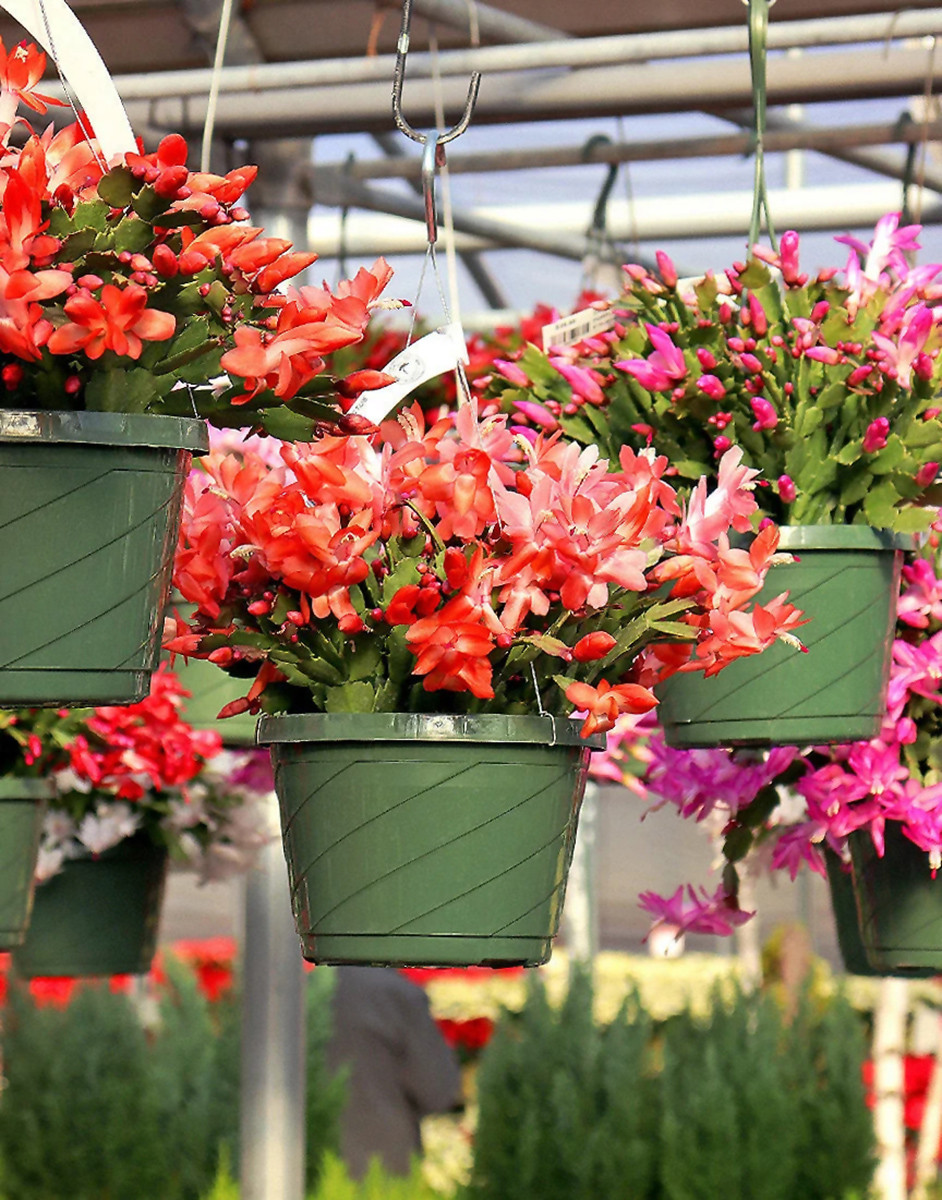
Photo courtesy of Family Tree Nursery
The best time to take cuttings from your Christmas cactus is in late spring or early summer, about a month or two after the plant has finished its blooming cycle. You want to choose Y-shaped cuttings that have at least two to four joined segments or “cladophylls.” They have stored energy so they can survive the rooting process. Gently twist the segments at a joint to separate them from the parent plant. Allow the raw, twisted ends to dry out and form a callus by place the cuttings in a cool, dry location away from direct sunlight for 24 to 72 hours.
Gently insert the callused end of each cutting about one inch deep into the prepared potting mix. You can place several cuttings in the same pot, spacing them out so they are not touching. Find a pretty, festive pot and make sure it has drainage holes in the bottom, then watch them grow. Mine is in a pot my children painted years ago!