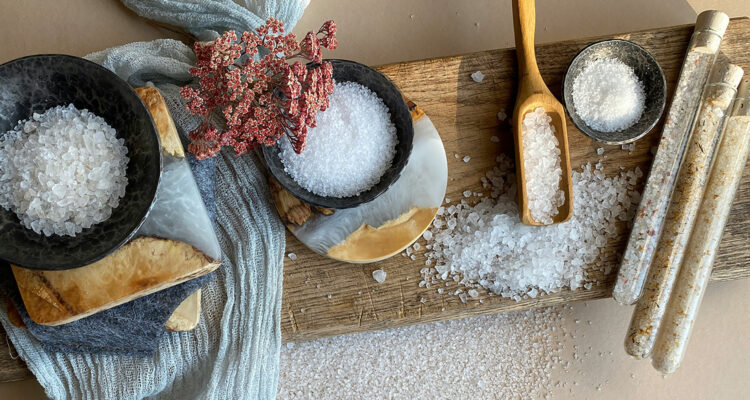
Digging into the grains of salt.
Story by Judy Spaar
When you think of salt, it is a bit of a no-brainer why it is on every table in the world. What would corn on the cob, fresh tomatoes, and the rim of your margarita be like without a shake or two?
But salt isn’t as simple as it used to be. Today’s go-tos have salt coming in every texture and color. Let’s take a deep dive into the salt of the earth.
What IS the difference between table and sea salt?
Believe it or not, each shares the same basic nutritional value. The obvious difference is the source of each. Spoiler alert: eating too much of either can lead to high blood pressure and heart disease. Everything in moderation is the key here.
Now, the process. Sea salt is made by evaporating seawater. The sea salt left over from evaporation is not processed much, so it retains traces of minerals like calcium, potassium, and magnesium. These crystals are larger than table salt and add that crunch when sprinkled on food.
Table salt is mined from salt deposits and is processed to make finer grains. It is then fortified with additives to prevent it from clumping, one of which is iodine, which helps make thyroid hormones, thus contributing to thyroid health.
Both table salt and sea salt contain about 40 percent sodium by weight, so with sea salt’s larger crystals, there is less sodium compared to table salt. Sea salt benefits include helping calm irritation in people with eczema when used in a warm bath. It can also increase hydration and reduce the roughness of dry skin.
The difference between iodized and non-iodized salt.
Is iodized salt better for your health than non-iodized salt?
For most people, iodized salt is the easiest way to maintain sufficient iodine intake, which is important for thyroid needs and produces certain hormones. Not getting enough iodine in your diet can lead to problems such as an enlarged thyroid gland and an abnormally low level of thyroid hormones. The most common dietary sources of iodine are seaweed, fish, dairy products, eggs, enriched grain products and plant foods grown in iodine-rich soils.
A side note is that in the early 1900s it was common to find areas in the United States, of iodine deficiency. Researchers from these areas encouraged the U.S. to adopt table salt iodization. Now more than 90 percent of U.S. households have access to iodized salt.
And Jimmy Buffett notes it best – “Wastin’ away again in Margaritaville, searchin’ for my lost shaker of salt.”
Himalayan Pink Salt
Pink salt, popular as Himalayan pink salt or Sendha Namak in India, comes from ancient salt deposits near the Himalayan mountain range, mainly from present-day Pakistan. These deposits are believed to be millions of years old, formed when ancient seas dried up and were sealed under layers of rock.
Its soft pink color comes from natural minerals like iron, magnesium, potassium, and calcium. In taste, pink salt is milder and less sharp than regular white salt, which many people find easier on the palate. It can help maintain electrolyte balance and is gentler on blood pressure when used correctly. The popular salt lamps can help clear nasal passages and be soothing during colds and seasonal allergies. Because it is milder, pink salt enhances flavors without making dishes overly salty, helping you naturally reduce overall salt intake.
Kosher Salt
This coarse salt has become an all-encompassing name for what is known as kosher-style salt. “Kosher” gets its name from its role in the Jewish culinary tradition of koshering, where salt is used more to draw out moisture from meat rather than to season it.
It has become the preferred everyday salt of chefs and home cooks alike. Among the golden rules of salt: You can always add more. And with kosher salt, it’s easier to maintain control due to its size and coarse texture. If you want to season like a chef, keep a saltshaker filled with kosher salt in your kitchen or part of a well-stocked pantry, then use the “raining” technique for seasoning: Sprinkle the salt from at least a foot above your food, and you’ll get more even coverage.
Gray Salt
Celtic salt, is found on seashores and is also a Sea salt. It is considered to be special because it has trace elements such as magnesium. It is also gray in color, which makes it different than other salts. There is little difference between it and Himalayan salt. Some people place some Celtic salt under their tongue and drink a glass of water, believing it will help with hydration. The average adult should consume no more than 2,300 milligrams of sodium per day, and a quarter teaspoon of Celtic salt contains 500 milligrams. So, a full teaspoon would be close to your daily intake.
Flaky Salt
Known for being a gourmet finishing salt, these delicate pyramid-shaped crystals add clean, briny flavor to dishes, while adding a crunchy texture. Used to elevate plates, think salted brownies, this finishing salt came into popularity just within the past couple of decades. Its traditional artisan methods date back to 1882, where is was pioneered by the Maldon Salt Company in the UK.