How years of steady refinement shaped a backyard retreat in Lee’s Summit.
Story by Mollie Pfeifer | Photography by Matt Kocourek
This residence occupies a peninsula-like rise in The Canyons, where two roads trace much of the property’s edge. A mature tree line along the eastern boundary provides some screening. Elsewhere, the boundaries remain exposed.
When Adam Frits of Rosehill Gardens became involved, the primary outdoor elements were already established. Mature oaks, junipers, and redbuds formed the canopy, creating what he describes as “views that designers dream of.” The pool and surrounding hardscape defined the gathering areas. The structure was in place. The details required attention.
“The homeowners love to entertain and relax with friends and family, and they wanted a space that could be their own oasis from the hustle and bustle of day-to-day life,” Frits says. “Overall, the function of the space was there, but the ease of care and simplifying plant choices and making a landscape that worked for the long term with their lifestyle was key.”
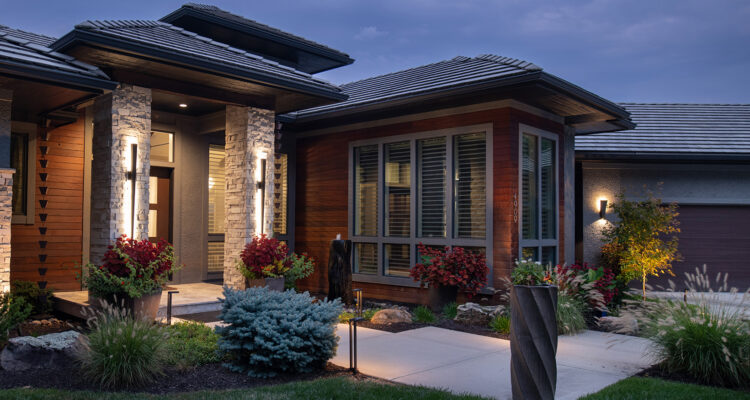
Rather than redesigning the property, revisions unfolded in phases over six years. The first major project addressed the eastern rock edge along the road. Trees and upright evergreens were layered against the stone face, while ornamental grasses softened the base with subtle movement. Seasonal plantings introduced shifting color against the rock, and integrated lighting added depth after dark. What had read as a hard roadside edge began to feel buffered.
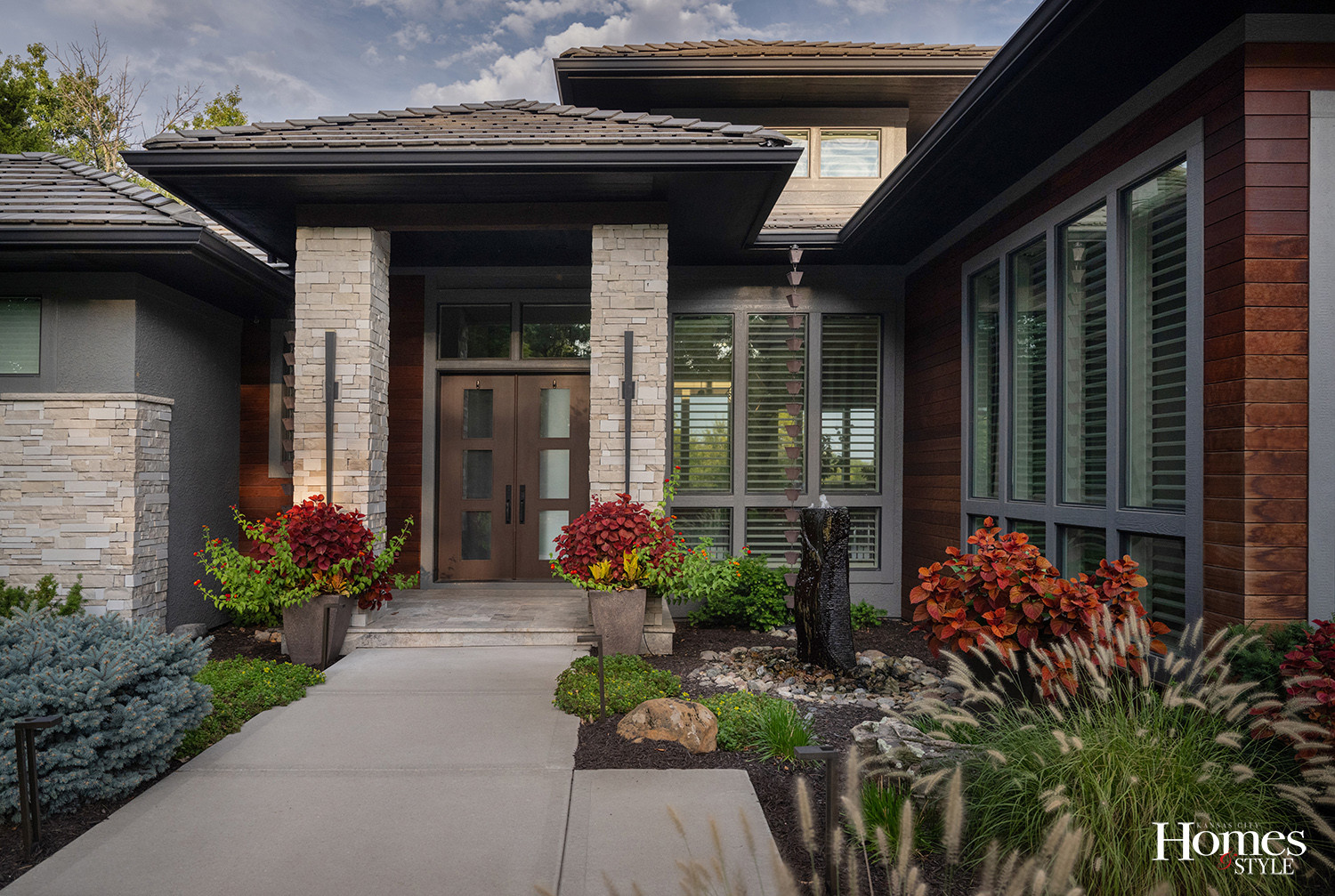
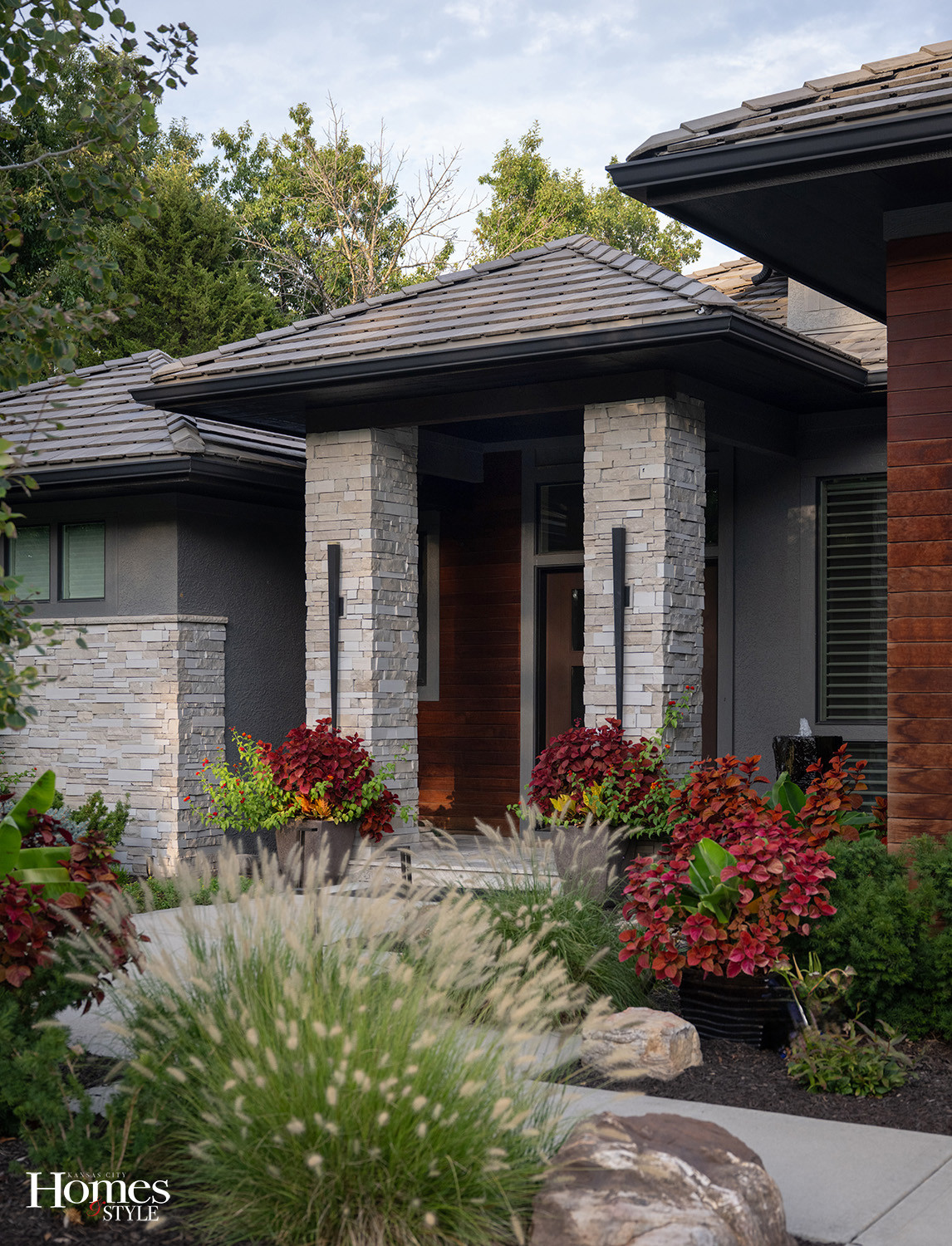
Subsequent phases evaluated plant performance. Perennials that had overtaken their beds were replaced with ornamental grasses selected for proportion, including dwarf Hameln, Miscanthus, and Karl Foerster grass. In the front yard, an overgrown and diseased blue atlas cedar was removed and replaced with a Japanese maple chosen for its ability to be trimmed and maintained within the space.
“Tastes change, landscapes need refreshing, and sometimes conditions don’t allow plants to thrive in their spaces,” Frits says.
Along the more exposed portions of the perimeter, additional planting introduced density where screening was needed. At the eastern rock outcropping, clump white birch, columnar white pine, and Green Giant arborvitae established vertical structure. Red twig dogwood, Adagio grass, catmint, and salvia were added for seasonal color, weaving low ribbons of violet and blue through the base layer.
A secondary driveway leading to a lower garage also required screening. Plantings were layered along this approach, including burning bushes, crabapples, and evergreens such as Norway spruce, blue spruce, and arborvitae. Over time, these additions limited direct views into the backyard.
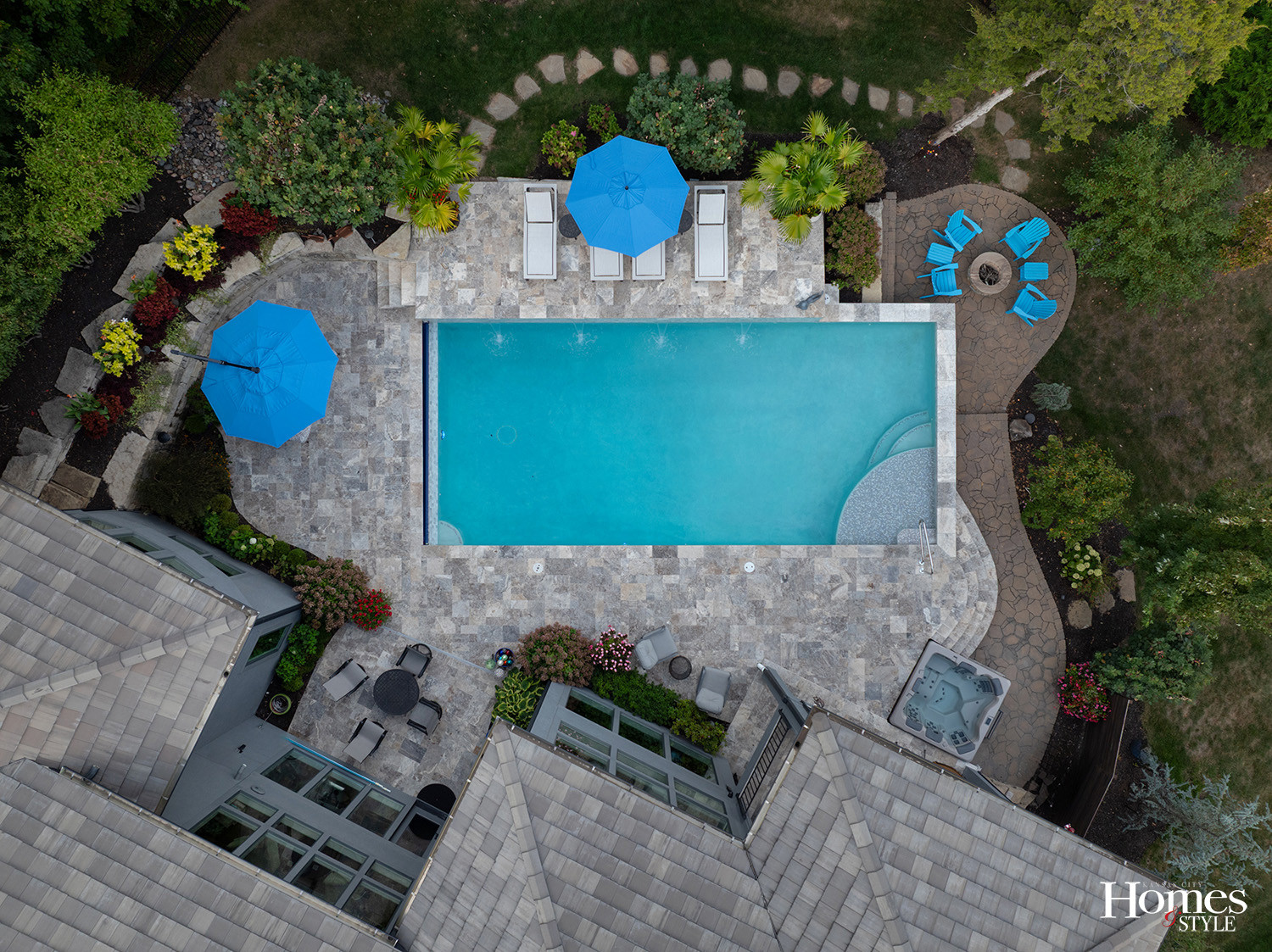
At the center of the yard, the pool remains the focal point and primary gathering area. Its placement organizes the surrounding patio, sun deck, and seating zones, creating a natural flow during gatherings. Movement between the house and the pool is direct, while adjacent lawn areas allow for overflow and quieter conversation.
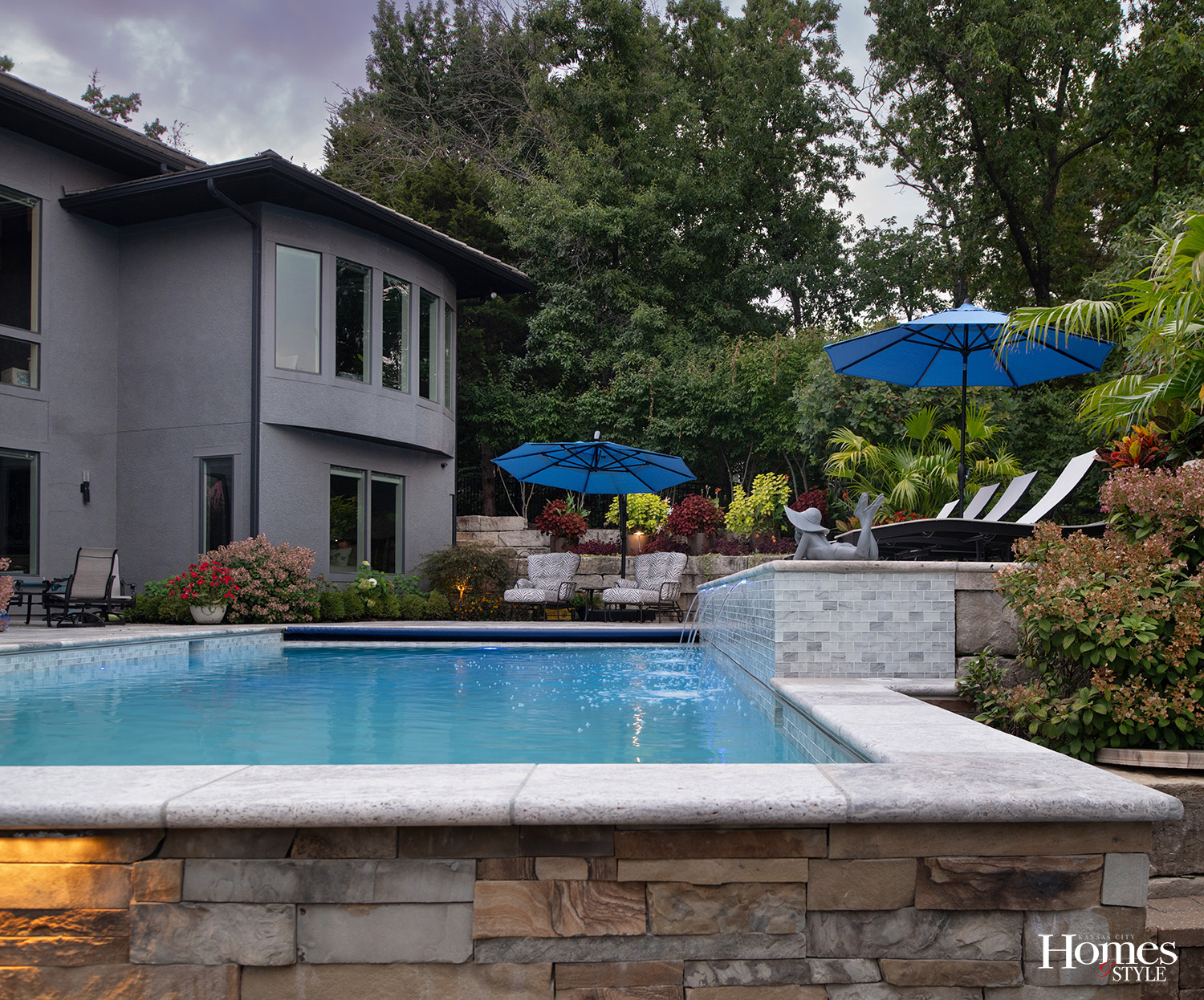
Architectural planters were introduced across the front and pool areas to add vertical height in previously open zones. Positioned strategically, they draw the eye inward and help define the patio without enclosing it. These planters support seasonal plantings and tropical selections such as Chinese fan palms and cannas, bringing contrast to the surrounding hardscape.
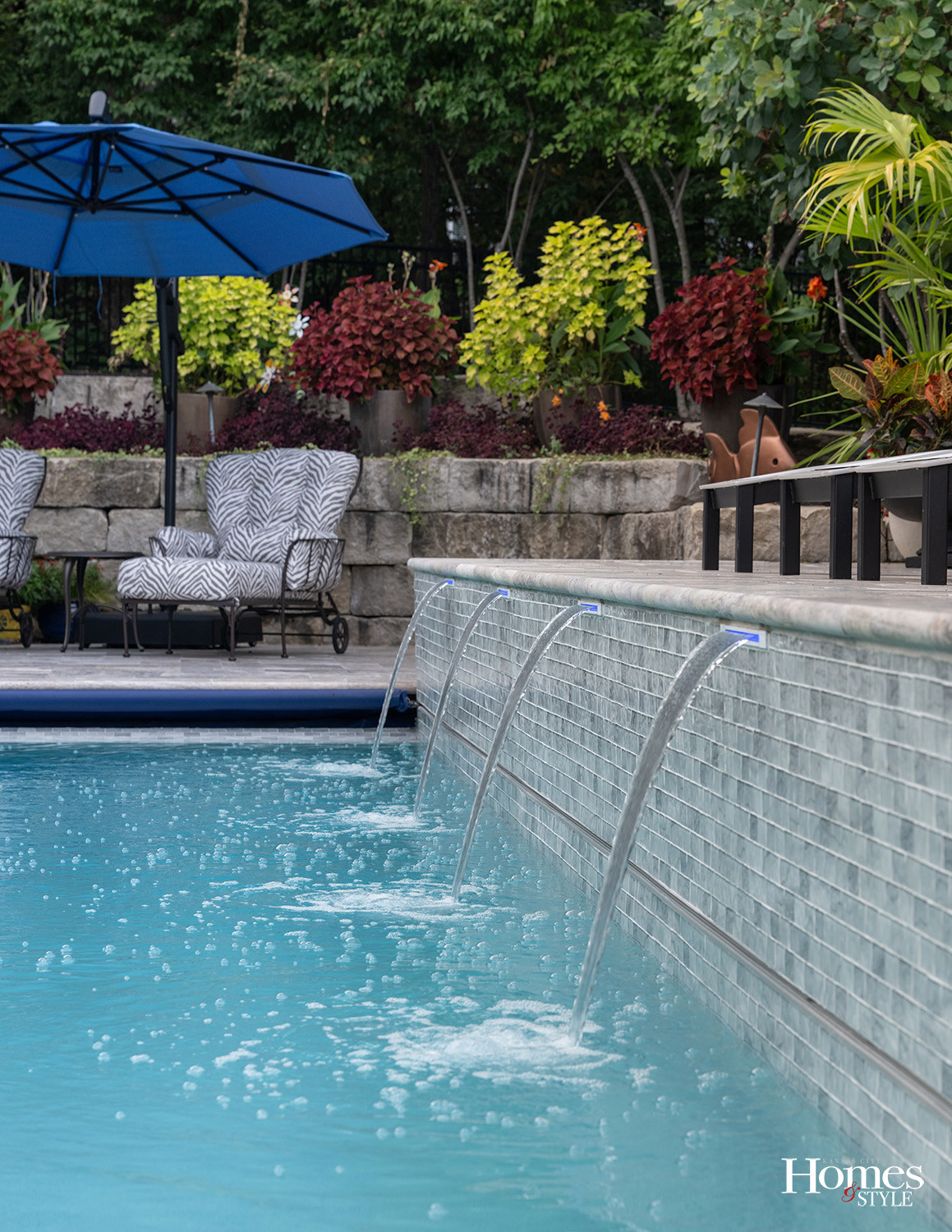
Water features and a nearby fire feature reinforce the pool’s role as a gathering anchor, extending use of the space beyond daytime swimming.
“The goal was always to keep the pool as a focal point to the space,” Frits says. “The seasonal color invites you and surrounds you so that you want to stay, relax, and enjoy it as long as you can.”
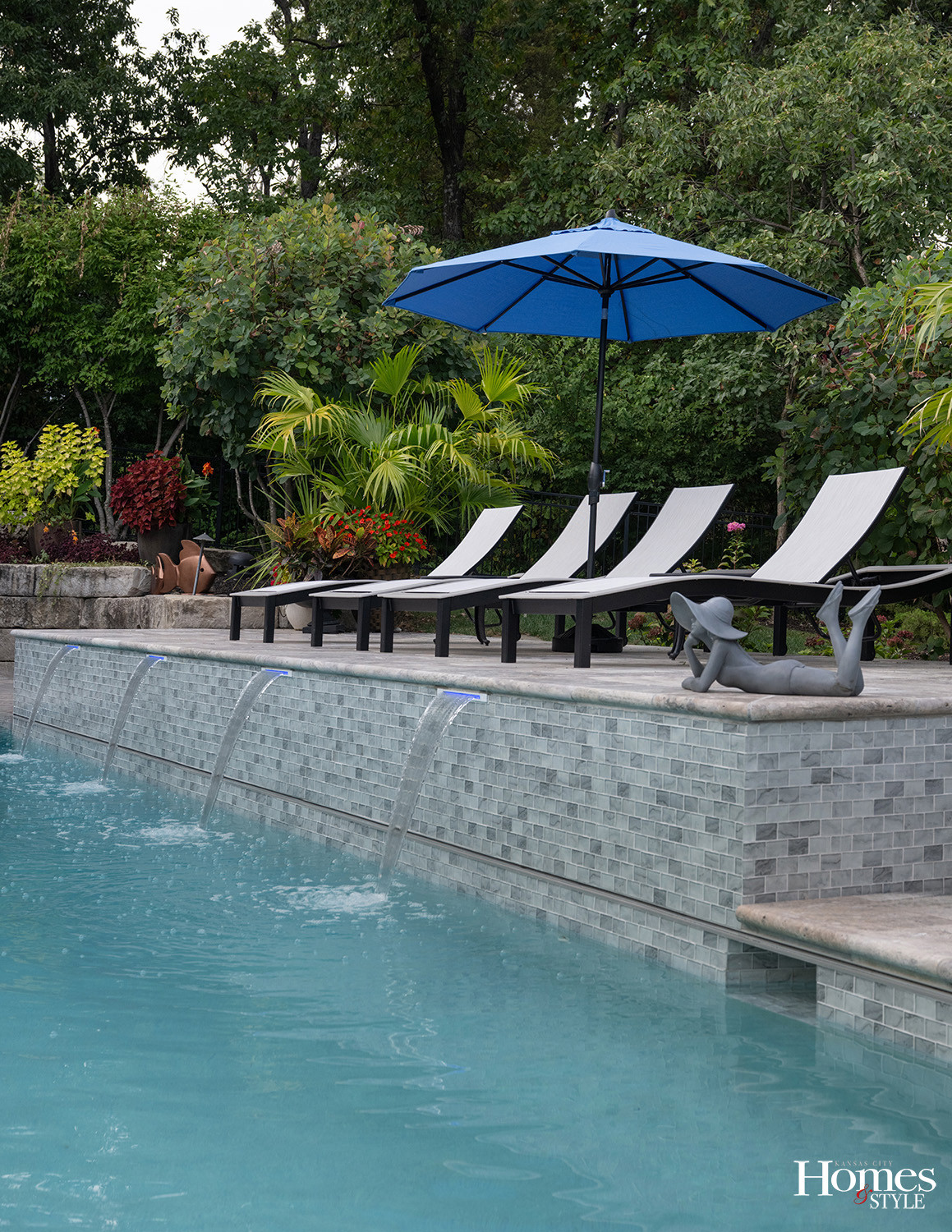
Material updates strengthened continuity across the property. Rehabilitation of the pool deck, patio, sun deck, and water features introduced silver travertine cut stone along the pool’s edge paired with small-format ceramic and glass tile. Lighting and brick paver edging were added to the drives to enhance and tie the property together.
“Color and stone selection for those projects helped tie the entire property together in what felt like the final pieces that were needed to create a long term and beautiful solution,” Frits says.
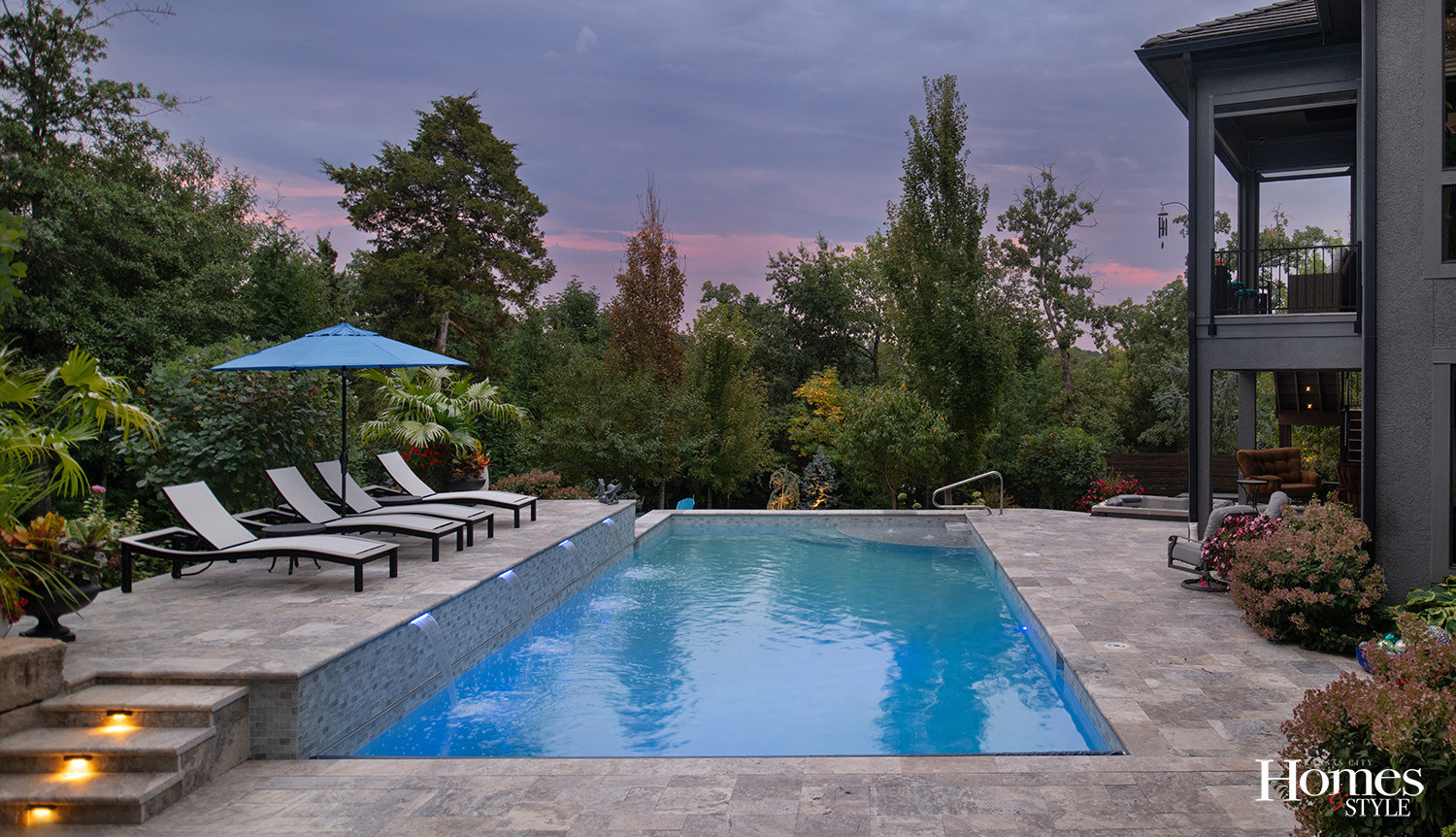
Lighting extends the use of the backyard beyond daylight hours. Driveway lighting, planter lighting, and the texture of grasses shape the evening atmosphere. Integrated step and hardscape lighting accent water features, while uplights and path lights highlight canopy and layered planting.
“Lighting is just as important, because our lives don’t stop when the sun goes down,” Frits says.
The property remains visible from surrounding roads. Inside the perimeter, the experience shifts. Reinforced boundaries and phased updates reshape how the space functions for gatherings and daily use.
From the beginning, the homeowners wanted a place where they could gather with friends and family and step away from the pace of day-to-day life.
On warm evenings, the movement from the house to the pool is easy. Grasses soften the perimeter, and seasonal color rises along the beds. As daylight fades, lighting lifts the trees and the nearby fire feature adds warmth. The space no longer feels defined by the roads beyond it, but by the layers within it.
Between exposure and enclosure, the landscape has matured into a retreat, shaped steadily over time.