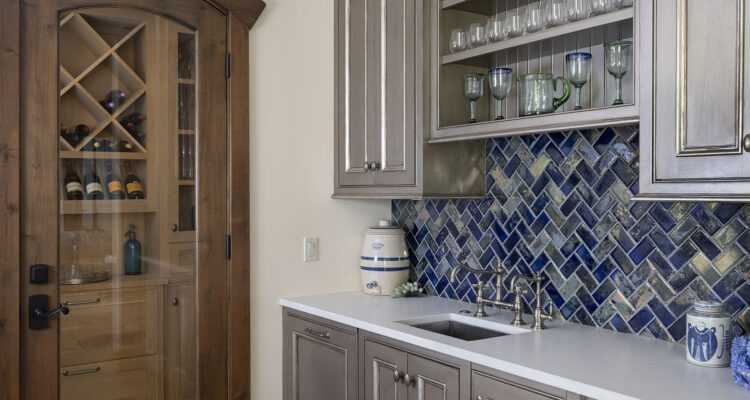
Discover expert insights on creating the perfect space to store your wine collection
Story by Ann Butenas / Photography by Amber Dawkins Photography
There’s something undeniably sophisticated about a well-designed wine cellar. Whether you’re a serious collector safeguarding rare vintages or simply someone who enjoys having a curated selection on hand, proper wine storage is both an art and a science. We spoke with Amy Migliazzo, Allied ASID of Amiglia Design Group, LLC, to discuss the essential elements of wine cellar design, from climate control fundamentals to emerging aesthetic trends.
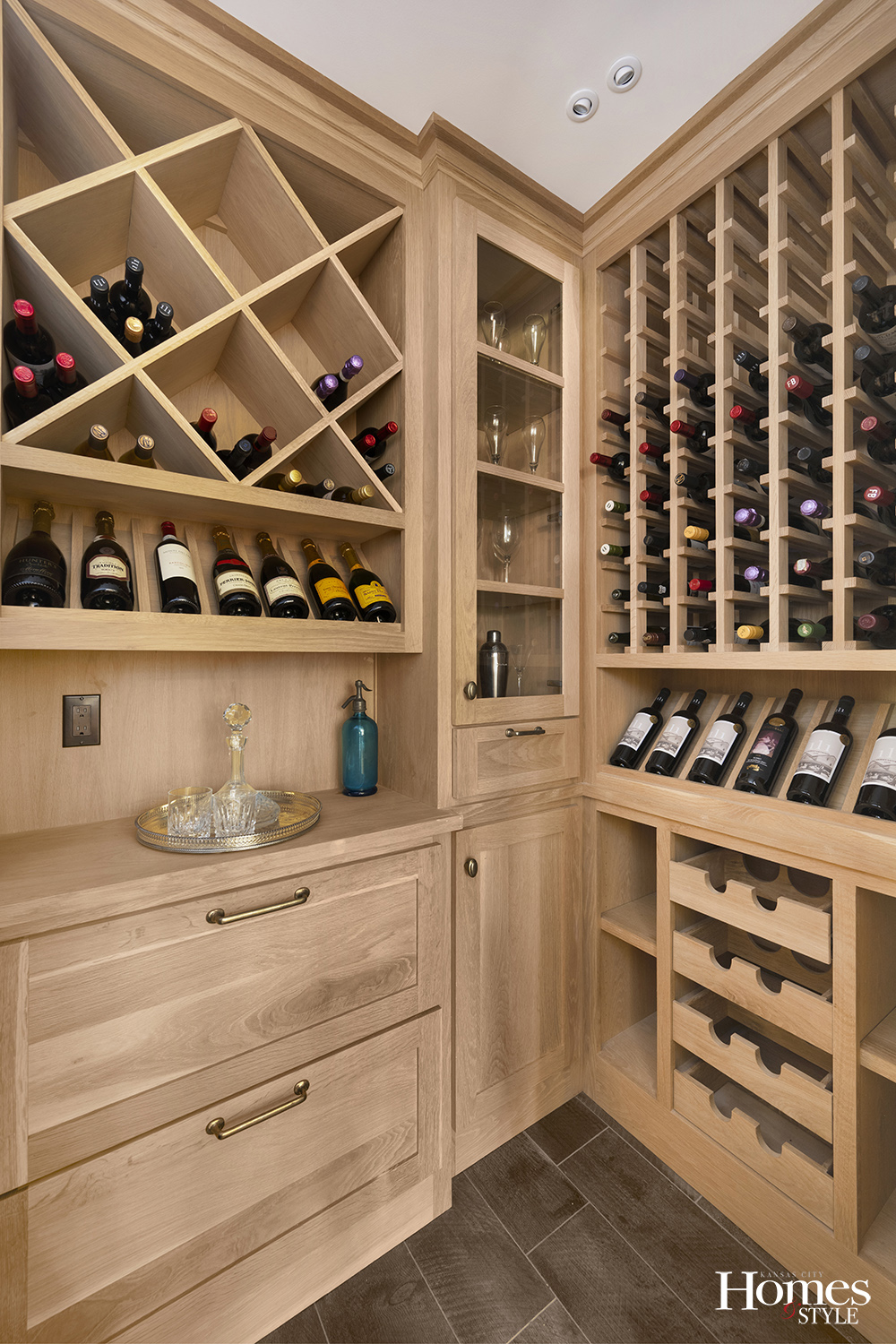
KCH&S: What are the most important functional considerations when designing a wine cellar (things like temperature control, humidity levels, and insulation), and how do these requirements influence the overall design and layout?
ADG: My first thought is always space and location, including how much room you’ll need for your current and future collection, and where to position it for optimal temperature control and light exposure. It’s very important to design the HVAC and control system up front, as these requirements fundamentally shape the entire layout.
KCH&S: What styles or aesthetic trends are you seeing in wine cellar design right now? Are people leaning toward traditional, old-world looks with dark wood and wrought iron, or are modern, glass-enclosed cellars more popular?
ADG: The last several years have been dominated by glass enclosures with stylish metal racks, but traditional is making a resurgence with stone-lined walls filtering back in. Some serious wine enthusiasts have a first-floor glass enclosure that speaks to the home’s design aesthetic, plus a lower-level collection room for their more extensive holdings.
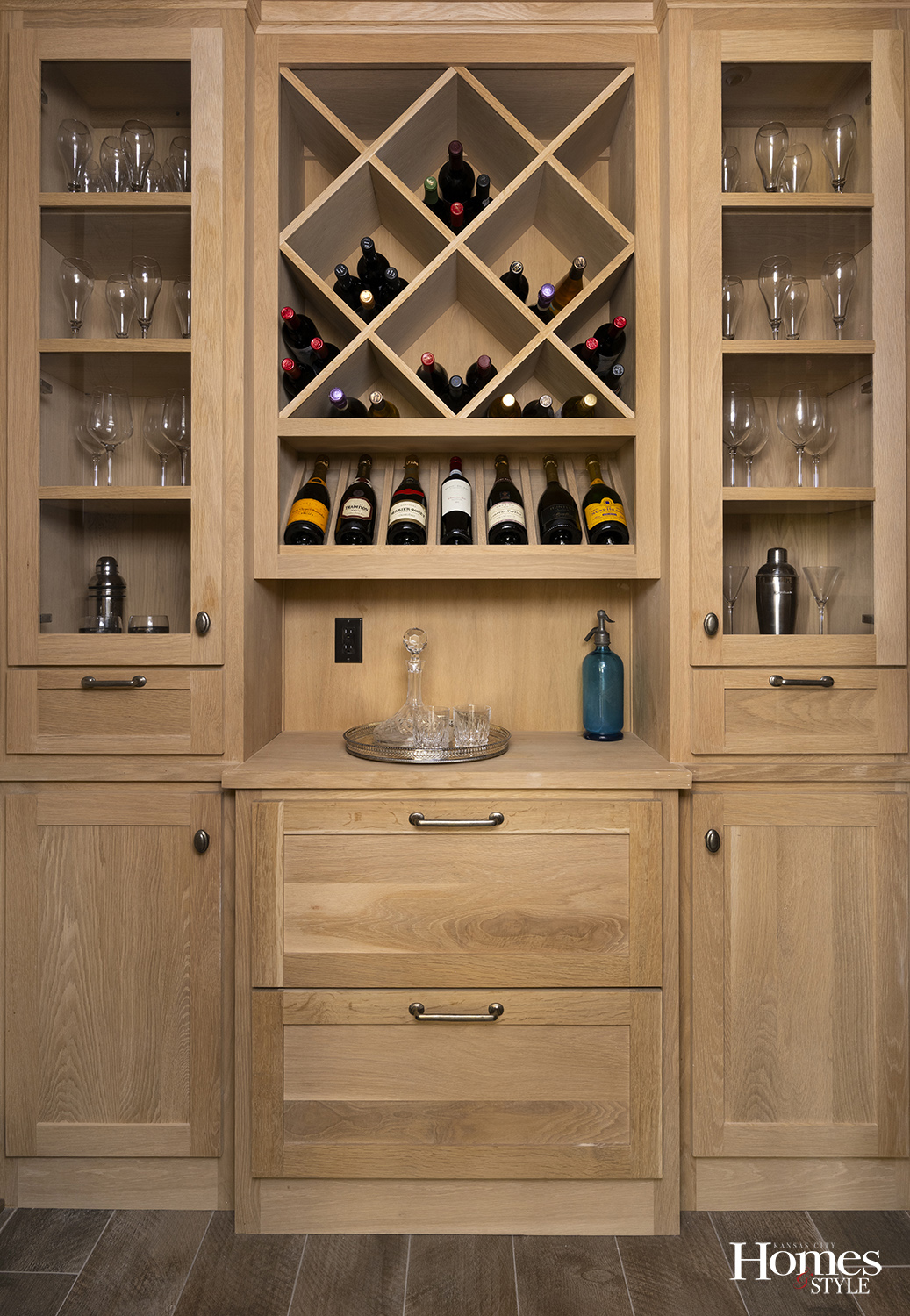
KCH&S: How do you approach designing for different types of collectors, such as someone who’s storing a serious investment collection versus someone who wants an everyday drinking cellar? Does the storage methodology or racking system change significantly?
ADG: The simple answer is “yes.” For serious collectors, we design racking systems for quantity and rotation using mahogany, redwood, or metal, plus dual-zone temperature control, programmable smart thermostats, electrochromic glass, proper outlets, decanting stations, rolling ladders, and uninterrupted power sources.
KCH&S: What are the biggest mistakes homeowners make when planning a wine cellar, whether it’s DIY or working with a professional? Are there common misconceptions about what’s needed?
ADG: Putting the refrigerated wine tower in the same location as the cellar collection is a major mistake, as the subtle heat affects room temperature consistency. Other common errors include HVAC vents blowing directly on bottles, poor air quality allowing mold and mildew, and placing collections under stairs, near HVAC units, or by hot water heaters.

KCH&S: How has technology changed wine cellar design in recent years? I’m thinking about things like climate control systems, inventory management apps, or even smart glass that can switch from transparent to opaque.
ADG: The apps available are amazing, and I recommend Cellar Tracker and Oeni for categorizing your collection, managing value, and knowing optimal consumption times. Electrochromic film and glass have improved significantly, offering simple manual switches or programmable solutions that integrate seamlessly with your home’s systems.
KCH&S: For someone working with limited space or budget, what are your recommendations for creating a functional wine storage solution that still maintains proper conditions and looks attractive?
ADG: Use oak for your rack system, as it’s stable, strong, and budget-friendly. Purchase a dehumidifier if a controlled HVAC system isn’t in the budget, and insulate the walls if possible to maintain consistent temperature. Of course, we’re always designing to the culinary lifestyle as well as the space and budget available to the client. Even with limitations, you can create a beautiful and functional wine storage solution.