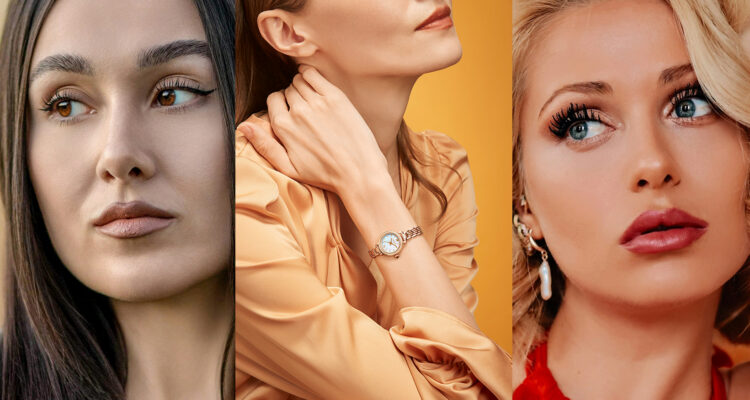
The one that looks best on you, of course.
Story by Judy Spaar
Many of us recall the trend of color analysis to find out what season we are, either warm, cool or neutral. Figuring this out now is not rocket science and pretty basic. Determining whether you are cool or warm can be done at home, if you like. Many of us can look at our closets and notice the colors we gravitate toward!
The first step is figuring out whether you have cool or warm undertones in your skin and hair. If you have cool undertones, your skin has a bluish, pink or rosy hue. And you choose silver jewelry versus gold, and your skin might appear better in blue-based colors, like blues, purples and pinks. On the flip side, if you have warm undertones, your skin has a golden, yellow or peachy hue, and you choose gold jewelry, and yellow-based colors like oranges, yellows and earthy tones.
If you want to get “scientific,” try the paper test! Place a sheet of white paper next to your skin in natural lighting and see whether your skin appears more yellow, which is warm, or pinkish/bluish or grayish, which means you are cool.
I recall the “draping” trick, where you try on different colors to see which make you shine. For example, orange (warm) versus blue (cool). Orange is the only color that is completely warm and uniquely suited to warm seasons. People with cool undertones can struggle to pull it off, while warm undertones look vibrant in it. Blue is very cool and will look fabulous on someone cool toned while appearing draining on someone who is warm toned.
Melissa Butcher, Owner-Cosmetologist of The Hair Room in Grain Valley, explains her simple approach to color, “Look at your eye color and your natural hair color, which guides you to colors you lean towards. A reliable indicator is how your skin reacts to different colors and what looks most flattering.”
She reiterated what I mentioned before about draping different colors under your chin to see what best complements you. Warm colors would be camel, rust, mustard and olive, while cool would be charcoal, cobalt, icy pink or pure white. If the color complements you, you’ll notice your skin will look clearer and your eyes will look brighter. If the color isn’t for you, you’ll notice lots of shadowing, redness, and dullness in your eyes.
Another expert in this field is Linda Davis, who owns House of Colour Kansas City, also has some tips and tricks for us. She has a nice repertoire under her belt that she has shared with thousands of clients.
They also help people discover how color can transform their wardrobes and even their confidence.
“Understanding your best palette of colors makes shopping and styling much easier. Clothes, accessories, and cosmetics all harmonize with each other and with your personal coloring, meaning you can mix and match more effortlessly,” she noted.
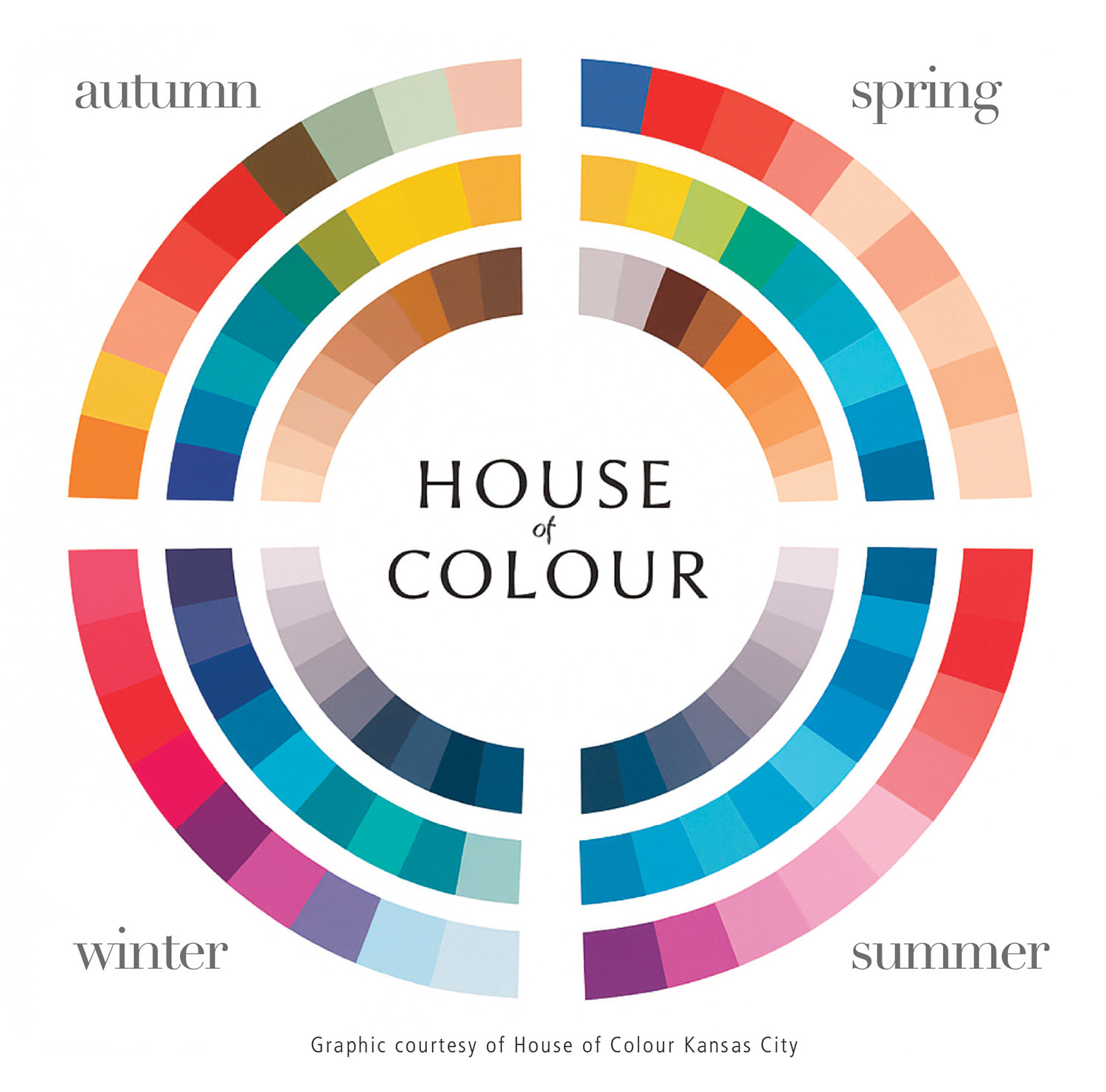
If you do decide to get a professional analysis, they can even offer helpful direction on hair color, although your natural color will always work with your coloring!
They suggest four main palettes:
-
Winter: cool and saturated
-
Summer: cool and soft
-
Autumn: warm and rich
-
Spring: warm, light, and fresh
Each palette includes thousands of colors and shades, yet sticking to one palette creates a wardrobe that feels cohesive and versatile.
A well-balanced wardrobe combines neutrals, basics, and more colorful options. Too many neutrals can feel boring, while too few can make putting outfits together tricky. Many of us default to black, but it can be harsh or aging on many of us. Navy, for example, is often a kinder neutral on most people.
White is another wardrobe essential as they generally fall into three categories: stark white, soft white, and warm white. Soft white sits in the middle and is a safe starting point.
Basics, like blues and greens, are foundational, while colorful pieces, such as reds, pinks, plums, corals, yellows, and oranges can be intimidating, but when you choose well, you’ll bring vibrancy and personality to your wardrobe.
Color analysis can also guide you on your best metal tones, either silver or gold. This isn’t just about jewelry. When you find the right metal it can complement buttons, zippers, glasses, handbag hardware, and more. Trends may come and go, but your ideal metal never changes.
“When it comes to organizing a closet, everyone has a method that works best for them, but my favorite is to start with clothing categories,” Linda expressed. “Including long sleeve tops, short sleeve tops, jackets, pants, skirts, shorts, athletic wear, and dresses etc. Within each category, I suggest organizing by color using ROYGBV (red, orange, yellow, green, blue, violet), followed by neutrals from light to dark. This method makes it easy to see everything at a glance, recognize colors you already have, and make thoughtful choices when adding new pieces.”