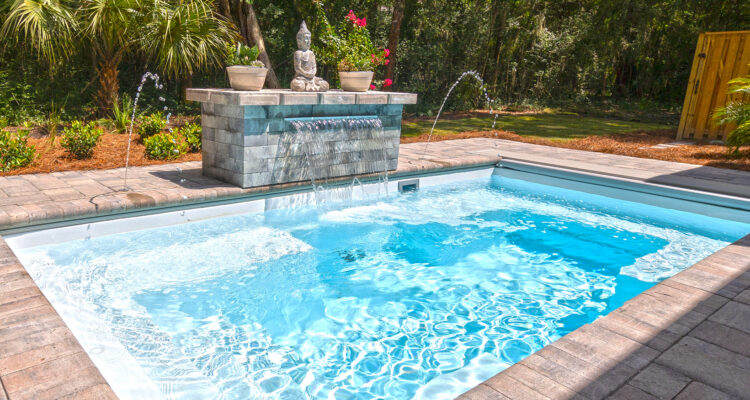
Plunge pools are transforming backyards and changing what it means to take the plunge when getting a pool.
Story by Ann Butenas / Images courtesy of Explore Industries; Leisure Pools. Photos by Richard Pohler
You want a pool, but perhaps your backyard has other ideas. It’s the classic standoff between desire and reality, and for years, reality won. If you didn’t have the square footage for a traditional pool, you were simply out of luck. Meet the plunge pool, which has changed that scenario entirely, proving that limited space doesn’t have to translate to limited options.
Right-Sized, Not Downsized
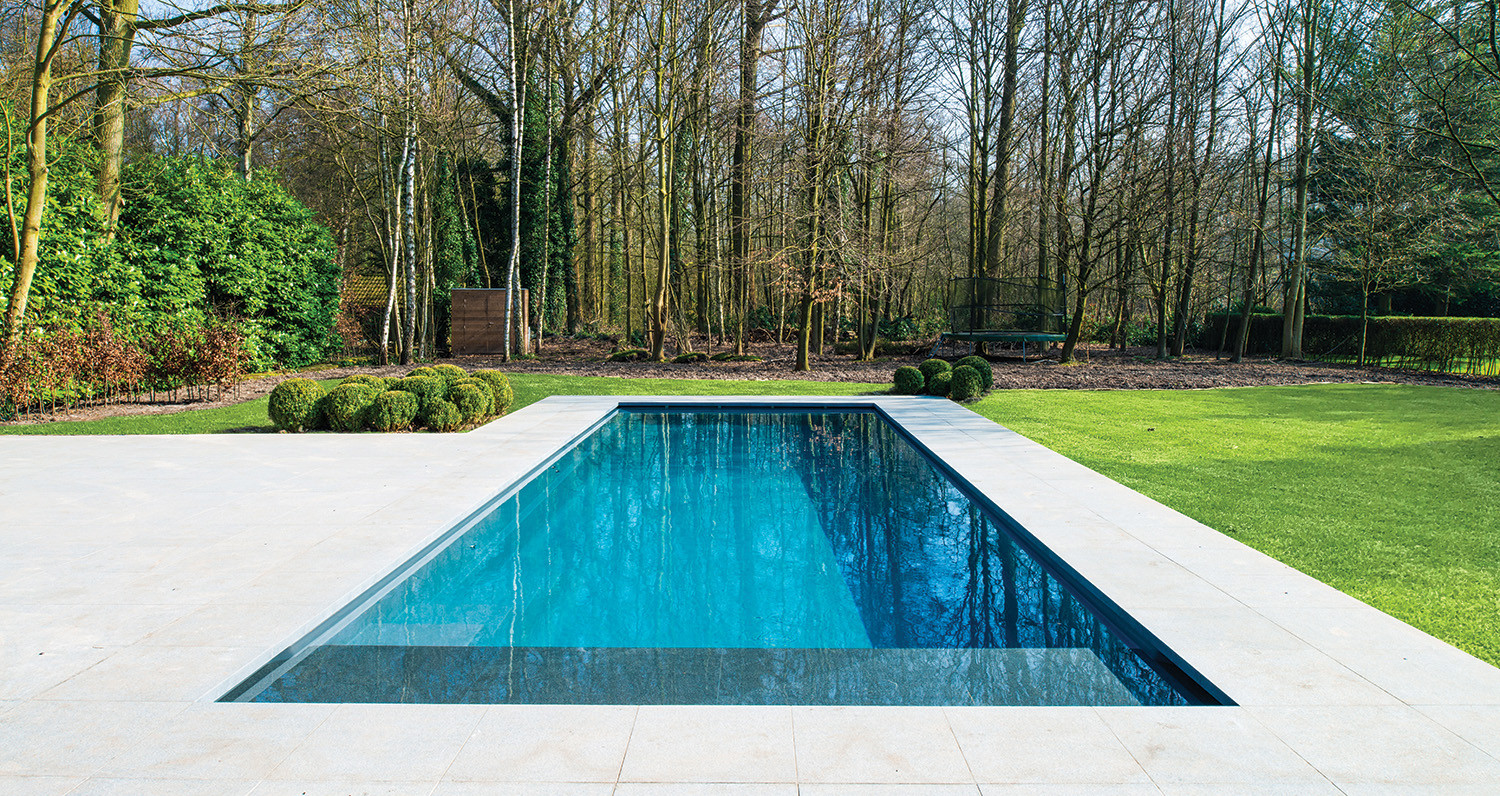
Here’s what makes plunge pools work: they’re not trying to be something they’re not. At roughly 20 feet long and eight feet wide, they sit comfortably between a hot tub and a full swimming pool. You get the cooling off, the water therapy, the summer enjoyment, but in a package that doesn’t consume your entire yard.
And that matters more than you might think. Because once you install a plunge pool, you still have room for the outdoor kitchen you’ve been dreaming of, a fire pit, or those luscious garden beds. You still have room for your dog to run and play, too. You’re not trading away your outdoor life for a pool. Instead, you are wonderfully adding to it.
Small Pool, Big Capabilities
Don’t assume compact means compromised, either. These pools pack a punch well above their weight class.
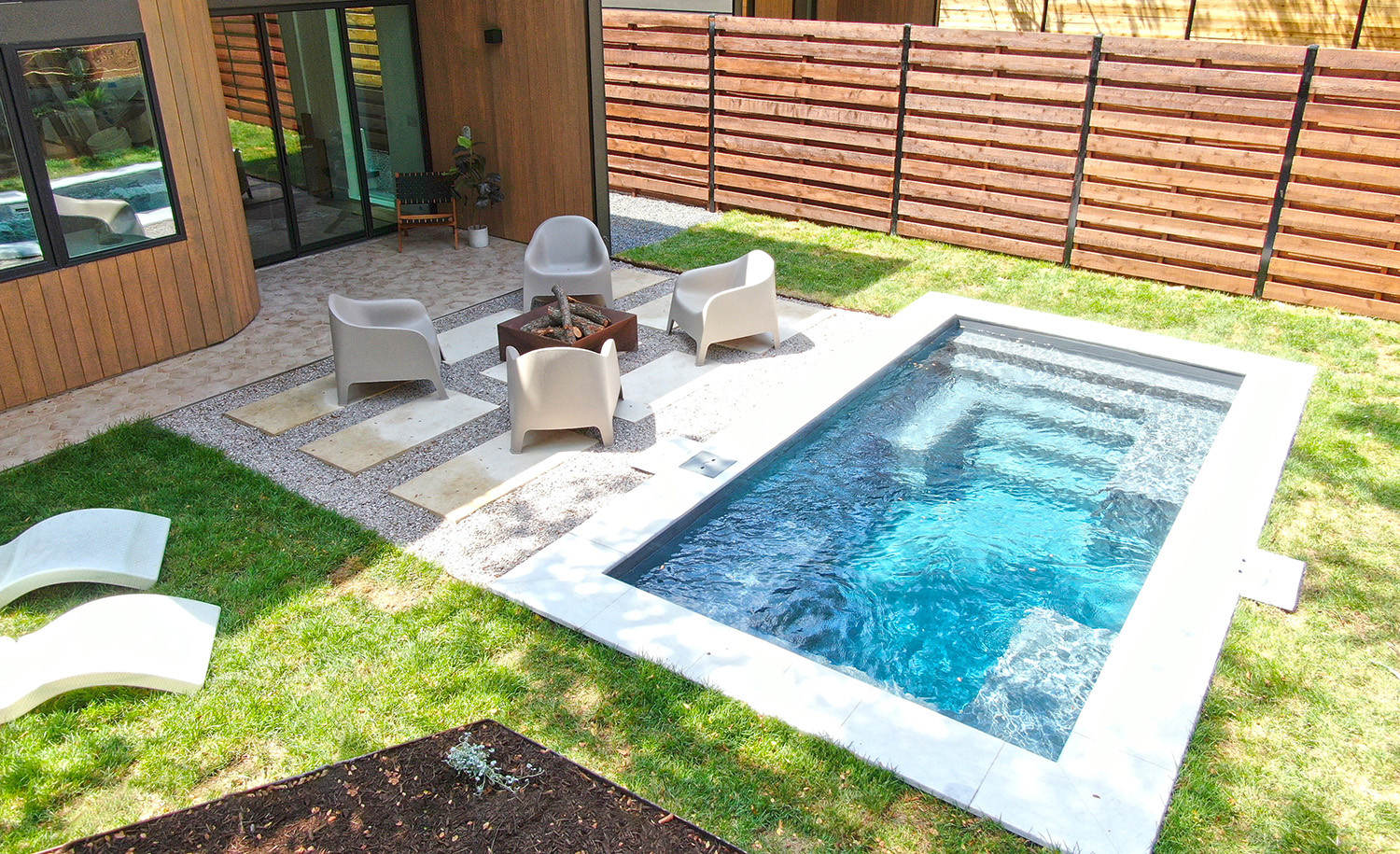
Take swim jets, for example. Install them, and you’ve essentially got an endless pool where you can swim against a current that lets you work out without going anywhere. You get the cardio, the full-body workout, and the meditative rhythm of lap swimming, all within a 20-foot pool.
Or, if you prefer a relaxing dip, you can skip the workout angle entirely and go with spa jets instead. After the kind of day where nothing went right, and traffic on 435 made you question your life choices, coming home to your own water therapy setup starts to feel less like a luxury and more like a necessity. Hydrotherapy helps with muscle recovery, joint pain, and stress. What a great prescription to erase the pressures of a long day.
What strikes people once they have a plunge pool is how often they use it. It becomes the morning coffee spot, the after-work decompression zone, the weekend hangout with friends. It’s a small footprint with an oversized impact on daily life.
The Numbers Actually Work
Let’s address the elephant in the room, as we know what you are thinking: cost. Traditional pools may run $70,000 and up, which puts them firmly in “someday” territory for most people. Plunge pools typically land between $20,000 and $50,000, which moves them into the “this might actually be possible” range.
But installation cost is just the opening act. The real savings play out month after month. You’re dealing with 1,200 gallons of water instead of 20,000-plus. Every chemical purchase costs less. Every heating cycle costs less. Every filtration run costs less. It adds up faster than you’d expect.
Want to heat your pool and use it from April through October instead of just through the scorching summer months? With a plunge pool, you can do that without watching your utility bills explode. The math works because you’re heating a reasonable amount of water, not a small lake.
Maintenance follows the same logic. Less water means less time balancing chemistry, less energy running pumps, fewer hours devoted to upkeep. More swimming and less maintenance sounds like a backyard dream come true, doesn’t it?
Design Gets Interesting
Smaller doesn’t mean boring, either. If anything, the reduced footprint of a plunge pool forces more creative thinking about how spaces connect and flow.
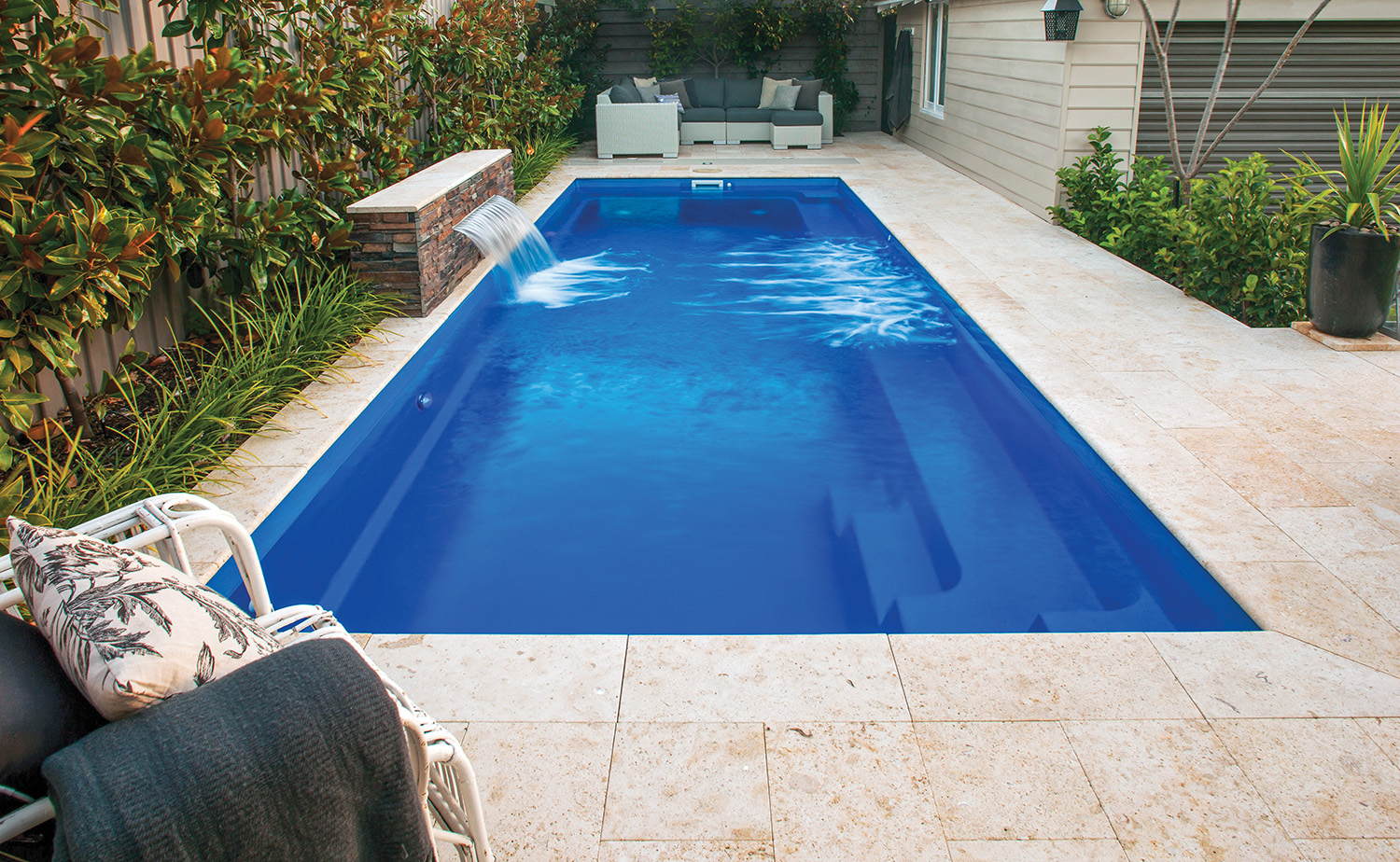
Have a side yard that could use a purpose? It’s an ideal plunge pool location. Have a patio you already love? Probably room to tuck a pool alongside it without demolishing everything in sight. Homeowners are installing them under pergolas, next to outdoor kitchens, and even in enclosed sunrooms for year-round access. Plus, you can add lighting that creates ambiance after dark, maybe a water feature for background sound, and some surround sound speakers, and suddenly you’ve built something that feels intentional and complete.
The aesthetic range is wide open, too. Go modern with clean lines and minimal plantings if that’s your style. Go traditional with stone and layered landscaping if that suits you better. The scale lets you focus on details and craft spaces that feel personal rather than generic.
Why This Works for Kansas City
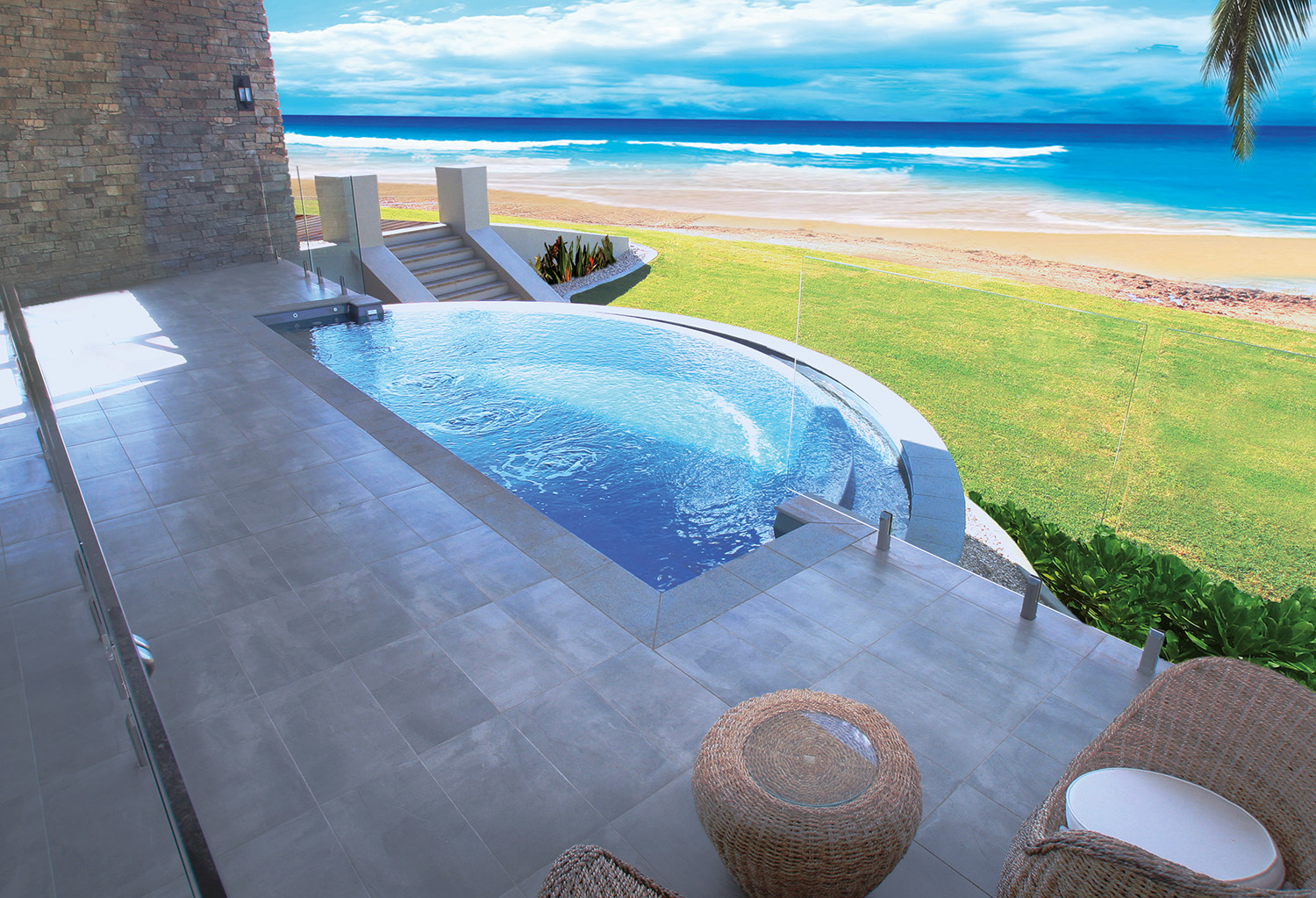
Kansas City’s established neighborhoods weren’t always platted with massive pools in mind. Brookside, Hyde Park, and Armour Hills are areas that have character, mature trees, and homes people genuinely want to live in. What they might lack is a space for a traditional-sized pool. Plunge pools solve that mismatch. You get the pool, the neighborhood stays intact, and you’re not sacrificing the garden, the shade trees, or the lawn to make it happen.
Leisure Pools, a division of Explore Industries, has made compact installations something of a specialty. Their fiberglass models are built specifically for tighter spaces, with features designed to maximize what you can do within limited dimensions.
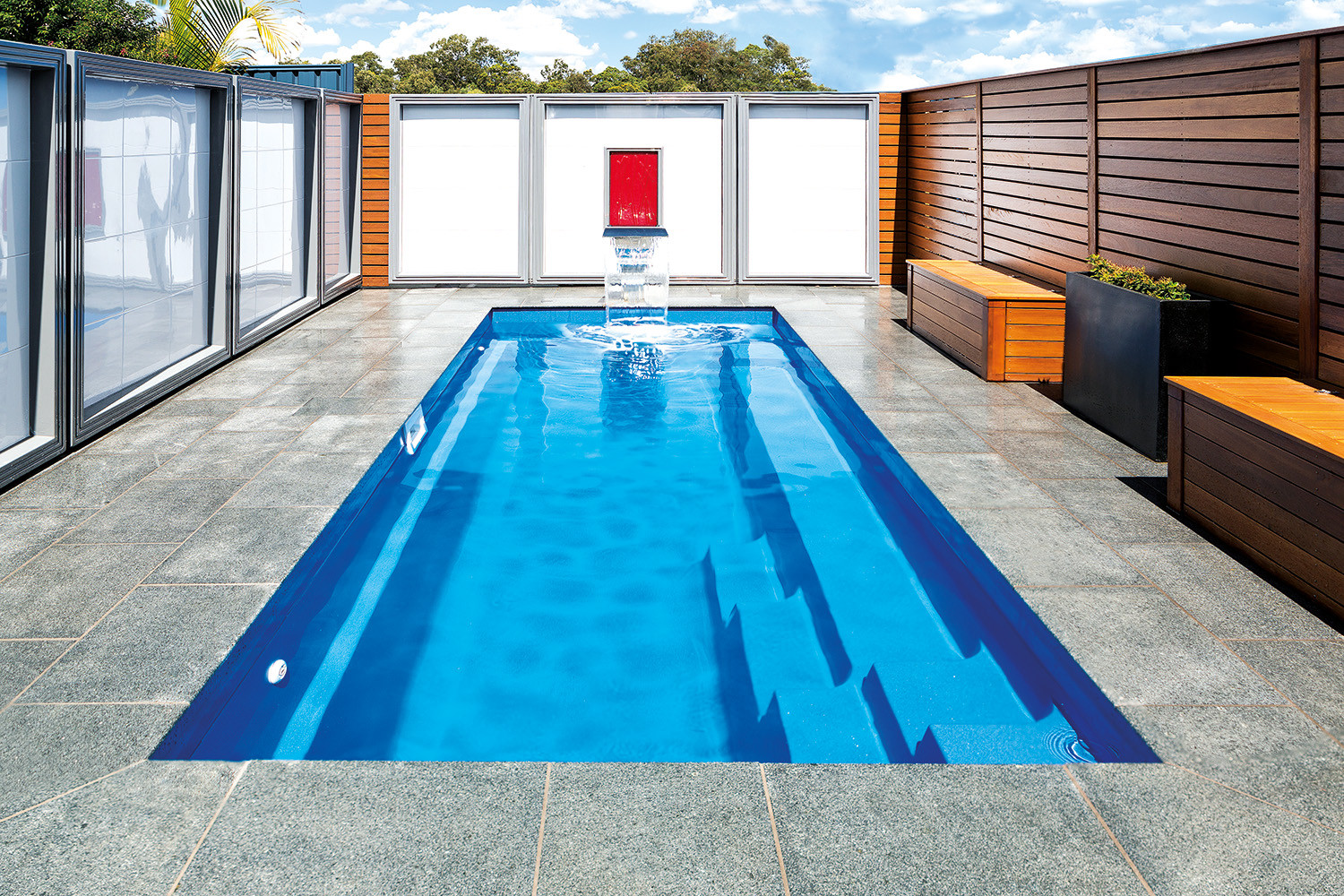
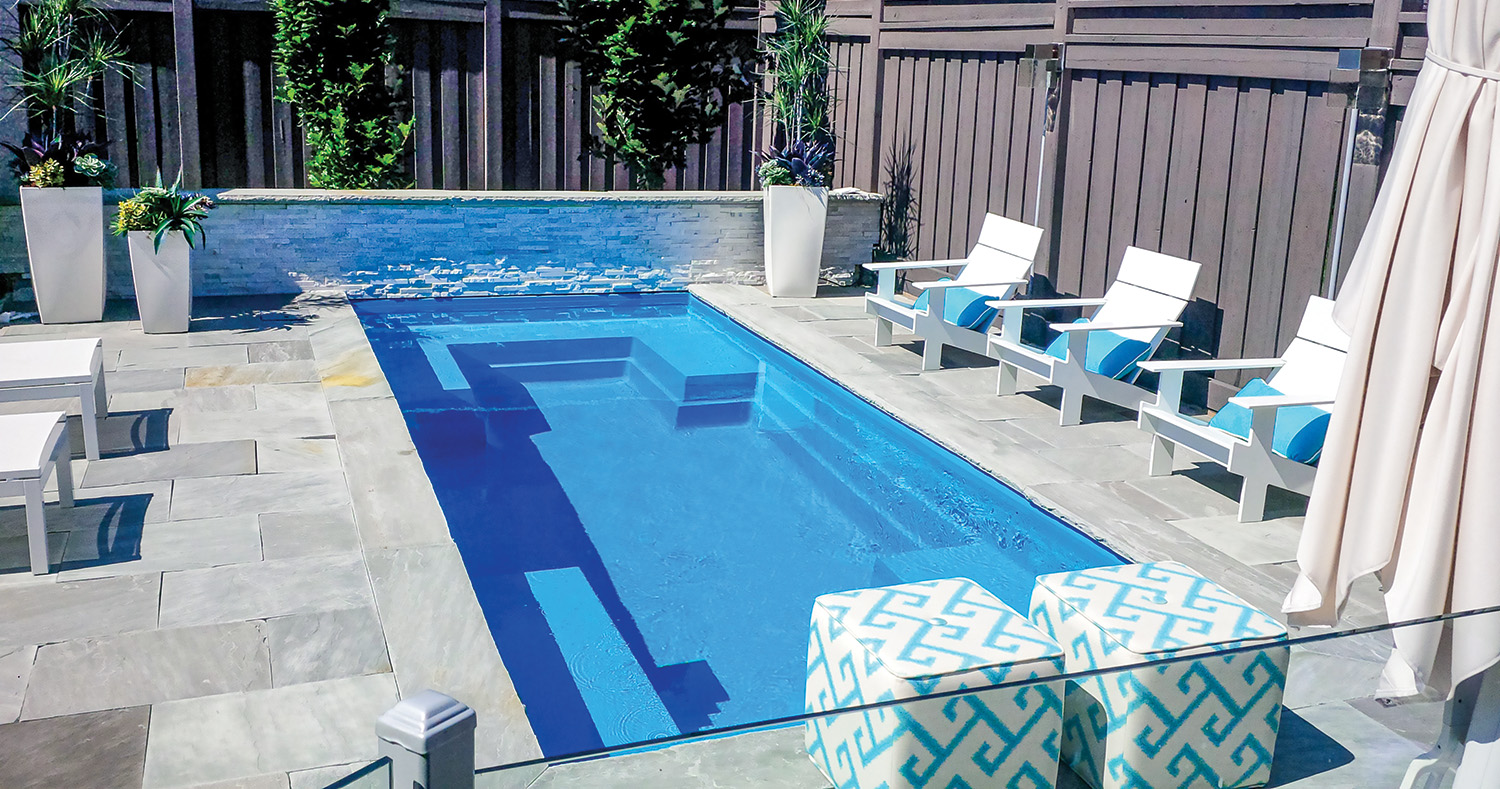
The Palladium Plunge comes in 16-foot and 20-foot versions, both designed for narrow lots. It offers entry steps and seating at one end, a wrap-around bench at the other, and consistent five-foot depth throughout. Add swim jets if you want the workout angle. Skip them if you just want a place to cool off and relax.
Fiberglass brings practical advantages, as well, thanks to their smooth surface that resists algae, lower chemical needs than concrete or vinyl, and less maintenance overall. When you’re juggling work, family, and everything else competing for your time, easier maintenance isn’t a luxury; it’s the whole point.
Worth Your Consideration
Maybe you picture starting your day with coffee by the pool. Maybe you want evening workouts against resistance jets. Maybe you just want something beautiful in your backyard that doesn’t require owning a mansion to make work.
Plunge pools prove that working within constraints often leads to better solutions. Plunge pools are simply more efficient and better suited to the actual space. Plus, they are more aligned with how people really live and use their yards. Sometimes the best answer isn’t bigger; it’s smarter.